
Network Security: The 7 Most Significant Digital Intrusions That Transformed Protection Measures
Introduction
Examine the most significant digital intrusions in computing history. Gain insights from incidents like WannaCry and NotPetya, and learn strategies to shield against upcoming online threats.
What constitutes Digital Intrusions?

Digital intrusions are intentional efforts to interfere with, harm, or obtain unauthorized entry to computing frameworks, networks, or information repositories. These attacks typically target organizations, governmental bodies, and individuals, with objectives such as monetary gain, operational interference, or acquisition of confidential information.
Intruders utilize various techniques, including ransom software to lock data and request payment, deceptive communications to acquire credentials, and coordinated server overload attacks to overwhelm systems and render them inoperable. Unlike subtle activities such as electronic espionage, digital intrusions are typically swift, highly noticeable, and disruptive.
Primary Characteristics:
• Goals: Financial extortion, service interruption, or theft of personal and corporate information
• Techniques: Ransom software, deceptive communications, server overload attacks, malicious code, and exploiting program weaknesses
• Victims: Commercial entities, government institutions, medical facilities, financial institutions, and individual users
Examples of digital intrusions include prominent ransom software incidents like WannaCry, which impacted hundreds of thousands of systems globally, and extensive information compromises that exposed millions of user profiles.
7 Most Significant Digital Intrusions in Computing History
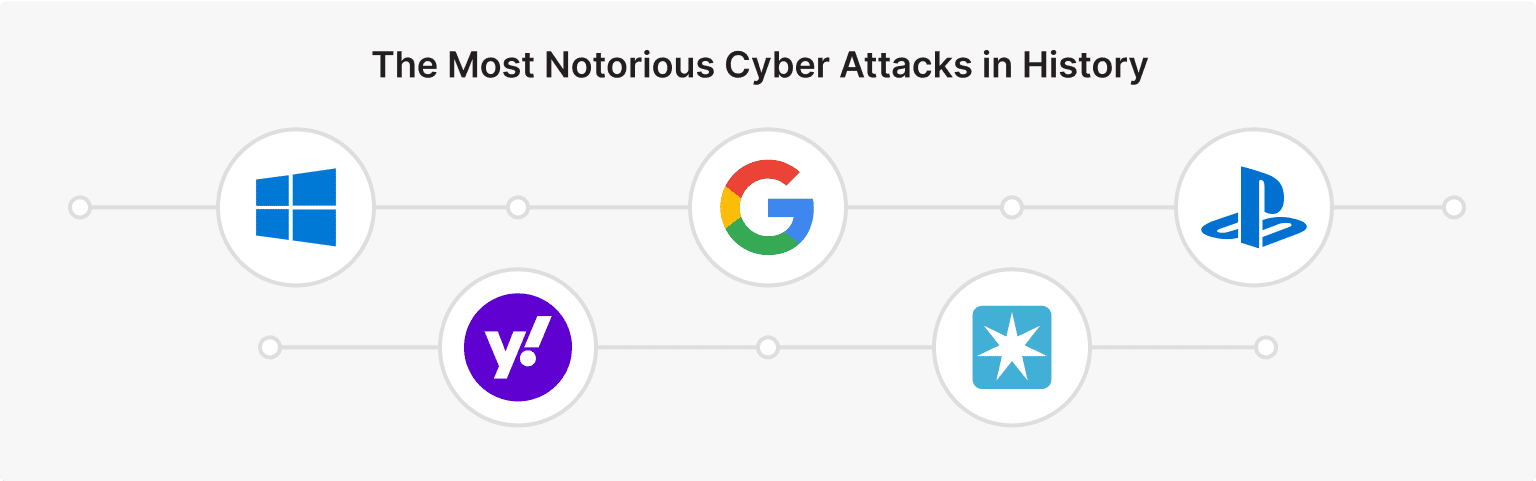
Examining past significant digital intrusions helps identify recurring patterns. Many of these notorious incidents introduced novel tactics or exploited unaddressed vulnerabilities. Studying these events provides lessons on preparation and swift response.
Some consistent themes include:
• Inadequate update: Management allowed harmful software to propagate
• Insufficient: Protection exposed personal and financial information
• Delayed: Event response magnified damage
• Minimal: Staff awareness enabled deceptive communication success
WannaCry
WannaCry ranks prominently among significant digital intrusions. It surfaced in May 2017, expanding rapidly across approximately 150 countries and infecting over 200,000 devices. The perpetrators utilized a recognized Windows vulnerability (EternalBlue), previously fixed by Microsoft, but many organizations neglected to apply the correction.
Key aspects of WannaCry:
• Technique: Ransom software encrypted files and demanded Bitcoin payments
• Consequence: Medical frameworks, transportation networks, and business servers were disrupted
• Notable victim: United Kingdom’s National Health Service (NHS), causing appointment cancellations and delays
• Recovery measure: A termination domain halted further spread
• Insight gained: Prompt updating, offline backups, and strict endpoint protection reduce ransom software risk
WannaCry demonstrated that even a known vulnerability could trigger a major digital intrusion if organizations delay updates. This case reinforces that strong updating and rapid detection are the best defenses against such attacks.
The Yahoo Information Compromise
The Yahoo information compromise is one of the most significant digital intrusions due to its unprecedented scale and far-reaching consequences. In 2013 and 2014, intruders compromised billions of accounts, making it one of the most extensive breaches ever recorded. The compromise wasn’t disclosed until years later, leading to outrage, legal challenges, and a major loss of user trust.
Key aspects of the Yahoo compromise:
• Information exposed: Names, email addresses, dates of birth, protected passwords, phone numbers, security questions
• Technique: Targeted deceptive communication and weak protection methods exploited by intruders
• Consequence: Identity theft risks, unwanted message campaigns, erosion of user trust
• Company response: Users were advised to reset passwords, adopt multi-factor verification, and monitor accounts
• Insight gained: Strong protection, timely breach disclosure, and proper incident response planning matter
PlayStation Network Violation
The 2011 PlayStation Network (PSN) violation shocked the gaming industry, becoming one of the most significant digital intrusions on an entertainment platform. Intruders gained access to sensitive data from approximately 77 million user accounts, forcing Sony to shut down the PSN for 23 days.
Key aspects of the PSN violation:
• Information exposed: Usernames, addresses, passwords, and financial details
• Consequence: Estimated $171 million in losses, significant downtime, and user frustration
• Response: Sony rebuilt the network with better security, offered identity theft insurance, and provided complimentary services
• Insight gained: Weak network infrastructure invites digital intrusions. Strengthening security layers and transparency after incidents improves user trust
NotPetya
NotPetya, which emerged in June 2017, is one of the most significant digital intrusions due to its impact on global supply chains and businesses. Unlike typical ransom software, NotPetya didn’t provide victims a way to recover their encrypted data, making it more destructive than financially motivated.
Key aspects of NotPetya:
• Technique: Initially spread through Ukrainian accounting software updates, then used EternalBlue and Mimikatz exploits
• Consequence: Crippled ports, freight terminals, food producers, and pharmaceutical firms
• Notable victim: Maersk, forced to rebuild thousands of servers and PCs
• Insight gained: Network segmentation, consistent updating, and well-tested incident response plans help limit damage
Operation Aurora
Operation Aurora, revealed in 2010, was an advanced Chinese electronic espionage campaign targeting major tech companies, including Google. This attack showed how complex state-sponsored operations can be and how even the most secure organizations are vulnerable.
Key aspects of Operation Aurora:
• Technique: The intruders exploited zero-day vulnerabilities in Internet Explorer to steal intellectual property and sensitive communications
• Consequence: Stolen corporate secrets, strategic information at risk, and a shift in Google’s operations abroad
• Insight gained: Countering electronic espionage requires vigilance, advanced security controls, and continuous code review
Target Information Compromise
The Target information compromise affected over 40 million customers during the holiday season in 2013. Intruders accessed Target’s payment system by exploiting weak credentials from a third-party vendor.
Key aspects of the Target compromise:
• Information exposed: Payment card details, including credit and debit card numbers, names, and security codes
• Technique: Malicious software installed on POS terminals via a third-party vendor’s compromised access
• Consequence: Loss of customer trust, financial damages, lawsuits. Estimated costs exceeded $200 million
• Response: Target improved security protocols, adopted EMV chip card technology, and offered free credit monitoring
• Insight gained: Keeping vendor access under control and monitoring third parties is essential
Equifax Information Compromise
The Equifax information compromise ranks among the most significant digital intrusions due to its scale and sensitivity of stolen data. In 2017, intruders exploited a vulnerability in Equifax’s web application framework.
Key aspects of the Equifax compromise:
• Information exposed: Social Security numbers, birth dates, addresses, and driver’s license numbers
• Technique: Unaddressed vulnerability in the Apache Struts web application framework
• Consequence: Extensive identity theft risks and reputational damage. Costs reached $1.4 billion
• Response: Equifax offered victims free credit monitoring and identity theft protection services
• Insight gained: Timely application of security patches and robust vulnerability management are essential
How to Prevent Digital Intrusions
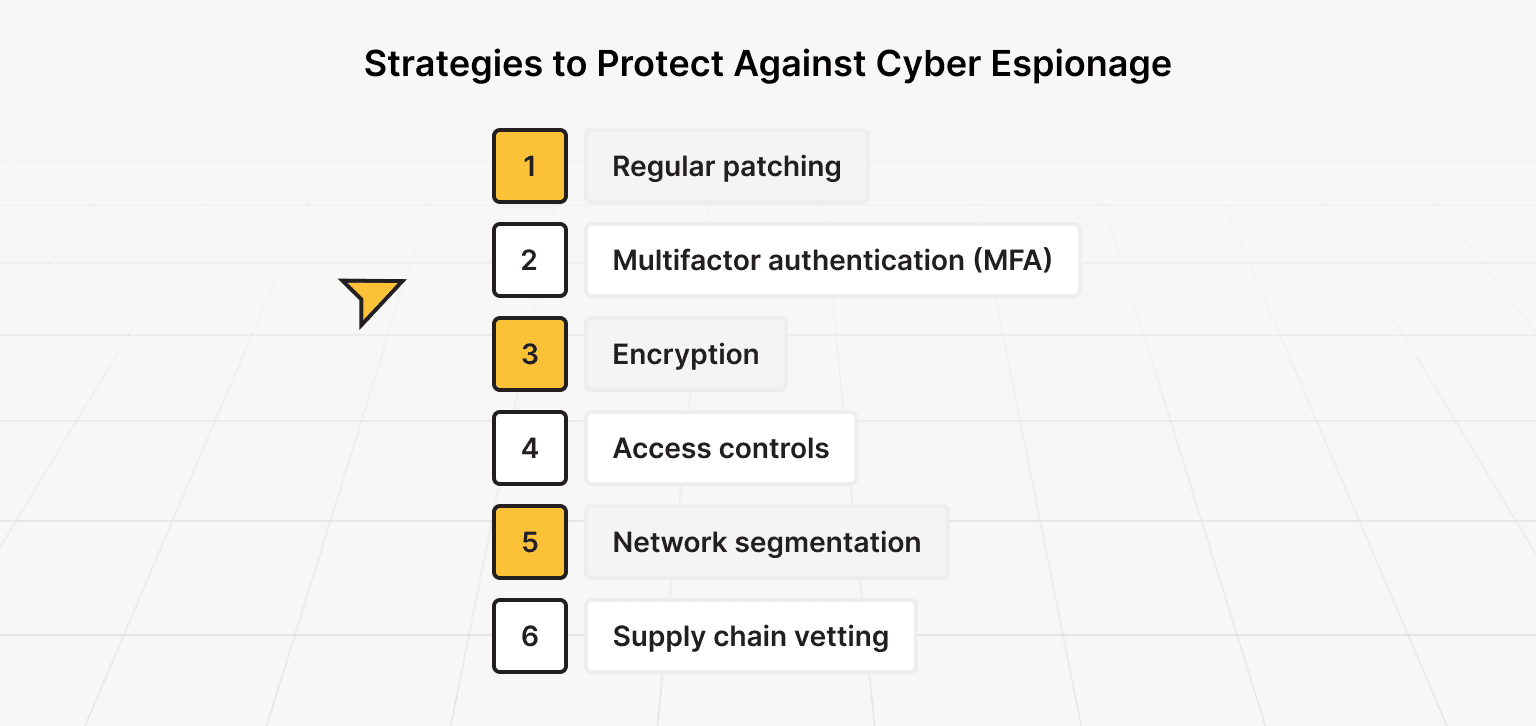
Main prevention steps:
• Regular updating: Apply corrections to close known vulnerabilities
• Multi-factor verification: Require multiple forms of authentication
• Information protection: Safeguard sensitive data at rest and in transit
• Entry controls: Restrict user privileges based on roles
• Network division: Isolate critical systems
• Supply chain evaluation: Assess third-party vendors
Advanced detection methods:
• Threat intelligence: Ensure awareness of emerging tactics
• Behavior analytics: Monitor user activities for anomalies
• Incident response: Conduct regular exercise drills
How to Detect Digital Intrusions
Digital Intrusions Detection Strategies
Strategy Table:
Strategy | Function | Benefit |
Intrusion Detection (IDS/IPS) | Monitor network traffic | Automatically blocks malicious activities |
SIEM | Aggregate and correlate logs | Comprehensive security view |
Endpoint Detection (EDR) | Visibility into endpoint activities | Stops malicious software spread |
Threat Hunting | Proactive IOC searches | Uncovers sophisticated attacks |
Network Analysis | Analyzes network activity | Identifies deviations quickly |
Red Flags Indicating Possible Digital Intrusion
Warning Sign | Description | Required Action |
Data Movement | Unusual outbound transfers | Transfer investigation |
Authentication Failures | Multiple login failures | Access policy review |
Privilege Changes | Unexpected admin accounts | Permission audit |
System Processes | Abnormal operations | Process verification |
Conclusion
Digital intrusions are constantly evolving, but each major breach offers insights on strengthening defenses. Examining the most significant digital intrusions in history reinforces the importance of being proactive. This means regularly updating systems, training employees, and using advanced detection tools. These attacks show that while no organization is entirely immune, resilience is possible with the right strategies.